Recommendation


Why Rapid Temperature Change Testing Matters in 2026
In 2026, rapid temperature change testing (rapid temperature cycling and true thermal shock) is no longer “nice to have.” It’s a design and validation gate for any serious electronics program. The reason is simple:
electronics are smaller, power density is higher, and field conditions are harsher than what old 2–3 °C/min chambers were designed for.
Where the demand is coming from
Today, I see most demand from four fast-growing sectors:
| Application | Typical Concern | What Rapid Temp Change Proves |
|---|---|---|
| EV batteries | Internal stress, seal fatigue, vent safety | Cell/module safety and life under fast temp swings |
| ADAS modules | Solder fatigue, BGA cracking, sensor drift | Long-term reliability in underhood and bumper zones |
| 5G electronics | High power density, tight tolerances | Stability of RF performance vs. rapid temp shifts |
| Aerospace | Altitude + temp transitions, mission-critical | Structural integrity and electronics robustness |
In all of these, customers expect long life, zero surprise failures, and fast validation cycles. That’s exactly where rapid temperature change testing earns its keep.
Temperature Cycling vs. Rapid Temperature Change / Thermal Shock
Engineers often mix these terms, but standards don’t:
- Temperature cycling
- Gradual ramps between hot and cold.
- Focus: fatigue over many cycles (e.g., 500–1000 cycles).
- Ramps can be relatively slow (3–10 °C/min in many IEC/JEDEC tests).
- Rapid temperature change / thermal shock
- Very fast change between extremes.
- Focus: crack, delaminate, or break it quickly if it’s weak.
- Uses high ramp rates and very short transfer times between zones.
- Often specified as ≥15 °C/min, ≥30 °C/min or even direct chamber-to-chamber transfer with <10 s.
A slow chamber can still do temperature cycling.
To claim rapid temperature change or thermal shock, you need high ramp performance and tight control of transition time.
Typical Temperature Change Rates in 2026
Most customers who contact us ask one thing:
“Can your chamber hit my standard’s °C/min with load?”
Here’s how requirements usually cluster:
| Use Case | Typical Rate (°C/min or K/min) | What Customers Call It |
|---|---|---|
| Basic electronics cycling | 3–5 °C/min | Standard temperature cycling |
| Automotive and industrial electronics | 10–15 °C/min | Rapid temperature change / fast cycling |
| Automotive OEM / LV124 / AEC-Q | 15–20 °C/min (min) | High-rate rapid cycling |
| Power modules, some EV battery R&D | 30–50 °C/min | Severe rapid temperature change |
| True thermal shock chambers | Effective >70 °C/min change with <10 s transfer | Thermal shock / air-to-air or liquid-to-liquid |
If your current chamber tops out at 5–10 °C/min, it’s fine for older IEC or basic JEDEC cycling, but it will not meet most new automotive, aerospace, or EV battery rapid temperature change requirements. That’s exactly why we build chambers specifically rated for high ramp rates and fast transition times.
Key terminology for rapid temperature change testing
When we talk rapid temperature change testing standards with U.S. customers, a few core terms come up over and over. If these aren’t defined clearly, it’s very easy to pick the wrong test profile or the wrong chamber. Here’s how I explain the basics when we’re sizing a rapid temperature change chamber for EV, automotive, defense, or electronics labs.
Temperature rate of change (°C/min or K/min)
The temperature rate of change is the backbone of any rapid temperature cycling test:
- It’s usually written as °C/min or K/min (they’re the same size unit in this context).
- Example specs you’ll see in standards and OEM specs:
- 5 °C/min – slower, traditional environmental testing.
- 10–15 °C/min – typical for automotive electronics (AEC‑Q100, LV124, ISO 16750‑4, etc.).
- 20–30 °C/min – used for more aggressive power electronics, ADAS modules, and some aerospace parts.
- 70 °C/min and higher – this is true high‑rate thermal shock, often for advanced power modules, EV inverters, or special defense and aerospace applications.
Two key points for rate of change:
- Many specs call out “linear” ramp rate – meaning the chamber must keep that rate consistently, not just “peak” for a moment.
- You want the specimen temperature, not just air temperature, to roughly follow the required rate. That’s why chamber performance and airflow design matter, not just the number on the brochure.
If you’re targeting automotive rapid temperature change testing, plan around at least 15 °C/min capability. If you’re building test capacity for future EV or high‑power designs, I usually recommend aiming for 30–70 °C/min so you’re not boxed in later.
Dwell time and transfer time
Two more terms that show up in almost every rapid temperature change test standard: dwell time and transfer time.
Dwell time
- This is how long the product stays at a given temperature extreme.
- Typical dwell times:
- 10–30 minutes for electronics modules and ECUs.
- Longer dwell for battery or large mass assemblies, to allow full temperature soak.
- Good rule: the product should be at or near the target temperature, not just the chamber air.
Transfer time
- This is the time it takes to move the product from cold to hot (or hot to cold).
- For true thermal shock, transfer time is critical:
- Many thermal shock standards want ≤ 10 seconds transfer time.
- Some allow up to 1 minute, but performance is much more severe when you’re under 10 seconds.
Why <10 s matters:
- A short transfer time means the product sees a sudden thermal stress, not a gentle ramp.
- This is what reveals cracks, solder joint fatigue, die attach issues, and seal failures that slow temperature cycling may miss.
- If your chamber has a “fast” ramp but needs 1–3 minutes to move between zones, that’s rapid temperature cycling, not true thermal shock in the strict sense used by MIL‑STD and some automotive thermal shock specs.
When you’re comparing equipment, always ask for:
- Verified transfer time (sec) between hot and cold zones.
- Product temperature response, not just environmental air specs.
Two‑zone, three‑zone, and liquid thermal shock systems
Different rapid temperature change testing standards and profiles push you toward different chamber designs. The three main types:
Two‑zone thermal shock chambers (air‑to‑air)
- Cold zone and hot zone with a basket or elevator moving the parts between them.
- Typical transfer times: 5–20 seconds, depending on chamber size and design.
- Good for:
- Automotive electronics (LV124 K‑15 rapid temperature change, GMW3172 high rate thermal shock).
- Aerospace and defense modules where you need fast but not extreme thermal shock.
- General rapid temperature change testing up to 70 °C/min.
If you want one flexible platform for most rapid temperature cycling test standards in the U.S. automotive and electronics market, a strong two‑zone air‑to‑air thermal shock chamber is usually the best value.
Three‑zone thermal shock chambers
- Cold zone, ambient zone, and hot zone in one system.
- The ambient zone can be used as:
- A buffer to stabilize parts.
- A way to run more complex test sequences (cold → ambient → hot, or custom profiles).
- These are chosen when:
- OEM specs or LV124 / VW 80000 / Porsche PTL 4002 call for stepped transitions.
- You need extra flexibility for customer‑specific thermal shock profiles.
If you deal with a lot of German or European OEM specs plus U.S. standards, a three‑zone design gives you more headroom.
Liquid‑to‑liquid thermal shock systems
- Parts are moved between hot liquid and cold liquid baths (often silicone oils or other specially formulated fluids).
- Ultra‑fast transfer time, often 1–3 seconds.
- Very high effective thermal shock severity, because liquids transfer heat much faster than air.
- Typical use cases:
- Bare semiconductors, power devices, small assemblies (JESD and AEC testing where allowed).
- Research and failure analysis when you need maximum stress in minimal time.
These are specialty systems. For larger modules or EV batteries, we usually stay with air‑to‑air thermal shock chambers due to size, handling, and contamination concerns.
If you’re not sure whether you need two‑zone, three‑zone, or liquid thermal shock, I usually start with three questions:
- What standards do you need to meet? (AEC‑Q100, LV124, GMW3172, MIL‑STD‑810H, IEC 60068‑2‑14, etc.)
- What ramp rate and transfer time do those standards really require?
- How big and how heavy are the test articles (ECUs vs. packs vs. boards vs. chips)?
From there we map the requirements to a chamber type and make sure your temperature rate of change and transfer time truly match the rapid temperature change testing standards your customers expect.
IEC 60068-2-14:2026 Change of Temperature – What Actually Matters
When we talk about rapid temperature change testing standards, IEC 60068-2-14:2026 is usually the base reference. This standard defines how to run change of temperature tests on electronic components, modules, and equipment, and it clearly separates rapid change (Test Na) from slow change (Test Nb).
Test Na vs Test Nb – Rapid vs Slow Change
- Test Na – Rapid change of temperature
- Used when you need fast ramps and short transfer times.
- Targets thermal stress from steep gradients inside the product (solder joints, bonds, interfaces).
- Often used as a reference for thermal shock style tests when the chamber can’t do true two‑zone shock.
- Best fit for reliability tests on modules, PCBs, and high‑power electronics where boards heat up fast.
- Test Nb – Slow change of temperature
- Lower ramp rate, more like climatic temperature cycling than thermal shock.
- Used when the goal is operational performance over a temperature range, not crack‑finding.
- Common for general electronics, enclosures, and units that just need to prove they work across temp limits.
If you want to claim rapid temperature change testing, you’re almost always talking about Test Na, not Test Nb.
Standard Ramp Rates: 3, 5, 10, 15 °C/min and Custom
IEC 60068-2-14:2026 allows several standard ramp rates:
- 3 °C/min – traditional climatic testing, not really “rapid”
- 5 °C/min – light stress, often for larger systems or sensitive assemblies
- 10 °C/min – common benchmark for rapid temperature cycling test standards
- 15 °C/min – where many automotive and power electronics specs start
On top of that, customers often ask us for custom ramp rates:
- 20–30 °C/min for tougher electronics and some automotive ECUs
- Up to 50–70 °C/min when they want to simulate near thermal shock in a single‑chamber system
As a rapid temperature change chamber manufacturer, we size heater and refrigeration power around these targets so you can actually meet the temperature rate of change requirements in the real load, not just in empty‑chamber specs.
Severity Levels and Exposure Times for Electronics and Modules
IEC 60068-2-14 doesn’t lock you into one severity; it gives you a framework. In practice, engineers in the U.S. typically define:
- Temperature range
- Common ranges: −40 °C to +85 °C, −40 °C to +125 °C, sometimes −55 °C to +125 °C
- Chosen based on application (consumer vs industrial vs automotive) and expected field conditions.
- Ramp rate and dwell
- Ramp: 5–15 °C/min depending on product and standard alignment.
- Dwell: usually 10–30 minutes at each extreme, long enough for the DUT core to stabilize.
- For real stress, you want the product core to reach the setpoint, not just the chamber air.
- Number of cycles
- Light screening: 10–50 cycles
- Reliability / design verification: 100–500 cycles
- Harsh life‑test style: 500–1000 cycles (often aligned with JEDEC / AEC requirements)
For U.S. customers, the way we usually position IEC 60068-2-14 is simple:
Use it as your base method, then tune ramp rate, temperature range, dwell time, and cycle count to match your industry standard (AEC, ISO, MIL, etc.) and your product risk level.
If you’re planning your next chamber purchase, the key question is:
“Do I need to reliably hit 10–15 °C/min on a loaded chamber, or do I need to push into 30+ °C/min territory for more aggressive rapid temperature change testing?”
That answer will dictate whether a standard temperature cycling chamber is enough, or if you need a high‑performance rapid temperature change system built for true stress testing.
MIL-STD-810H Method 503.7 Temperature Shock

For defense and aerospace customers in the U.S., MIL-STD-810H Method 503.7 temperature shock is one of the key rapid temperature change testing standards we design our chambers around.
Key test requirements
- Procedure I – single cycle temperature shock
- Used to simulate sudden deployment or rapid climate change (for example, from a heated hangar to high-altitude cold).
- The standard expects a very fast temperature change, typically ≥30 °C/min (30 K/min) or as fast as realistically possible for the use case.
- Transfer time between extremes
- The core requirement is moving the unit from hot to cold (or cold to hot) in ≤1 minute.
- In practice, that means:
- Very short transfer time between zones
- Minimal thermal lag around the test article
- If the chamber is too slow, it’s not true thermal shock under Method 503.7.
Where this standard is used
We see MIL-STD-810H temperature shock used heavily for:
- Defense electronics – radios, mission computers, weapon systems
- Avionics – flight control modules, sensors, cockpit electronics
- Rugged equipment – ground vehicles, portable gear, comms hardware
Because of these demands, our rapid temperature change chambers for U.S. defense and aerospace customers are built to:
- Hit high ramp rates (30 °C/min and above)
- Achieve very fast air-to-air transfer times
- Maintain tight control at both temperature extremes
If you’re targeting DoD, aerospace primes, or ruggedized industrial markets, your thermal shock setup needs to clearly show it can meet MIL-STD-810H Method 503.7 on both rate of change and ≤1-minute transfer.
JESD22-A104-E Temperature Cycling for Semiconductors
JESD22-A104-E is the go‑to rapid temperature cycling test standard for ICs and semiconductor packages. If you’re building automotive, 5G, EV, or power devices for the U.S. market, most Tier 1s and OEMs will expect this test in your reliability stack.
Key points of JESD22-A104-E temperature cycling:
- What it covers:
- Temperature cycling (not pure thermal shock) for semiconductors and microelectronic devices
- Focus is on solder joints, wire bonds, mold compounds, and package integrity
- Common test conditions (examples):
- Condition C:
- Typical range: −65 °C to +150 °C
- Used for high‑reliability and harsh‑environment devices
- Condition G:
- Typical range: −40 °C to +125 °C
- Very common for automotive‑grade ICs and consumer electronics
- Condition C:
- Temperature ranges and ramp rates:
- Common ranges:
- −40 °C to +125 °C
- −55 °C to +125 °C or −55 °C to +150 °C for tougher profiles
- Recommended temperature rate of change ≥ 15 °C/min (15 K/min)
- Our rapid temperature change chambers are designed to hit and hold these ramp rates with margin, so you’re not stuck running “slow JESD” that fails audits.
- Common ranges:
- Typical cycle counts for IC reliability:
- 500 cycles for standard reliability
- 1000 cycles (or more) for automotive, power, and safety‑critical parts
- Many U.S. customers pair JESD22-A104-E with AEC-Q100 / AEC-Q101 and expect consistent, repeatable temperature cycling across multiple chambers and locations.
If you need a rapid temperature change testing chamber that can cleanly execute JESD22-A104-E Conditions C and G—with ≥15 °C/min, tight control, and reliable cycle automation—we build our systems specifically around these semiconductor and automotive reliability requirements.
Automotive rapid temperature change testing standards
When I talk with U.S. automotive customers, rapid temperature change testing usually means one thing: proving ECUs, power modules, sensors, and battery‑related parts will survive aggressive on‑road and under‑hood swings. Most OEM specs now sit on top of a few core rapid temperature change testing standards.
ISO 16750‑4 temperature cycling (Clause 5.3)
ISO 16750‑4 is the base for a lot of European and U.S. OEM specs. Clause 5.3 covers temperature cycling for road vehicles:
- Used for ECUs, sensors, displays, inverters, and power electronics
- Typical ranges: −40 °C to +85/+105/+125 °C depending on location class
- Requires controlled ramp rates (commonly 2–10 °C/min) and stable dwell times
- Good “baseline” automotive rapid temperature cycling standard if your customer doesn’t specify something stricter
For our chambers, we size ramp capacity and soak time precisely around the ISO 16750‑4 profile your team actually runs.
LV124 K‑15 rapid temperature change (15 K/min)
For German OEMs (VW, Audi, BMW, Mercedes), LV124 K‑15 is the real workhorse for rapid temperature change testing of 12 V and 48 V components:
- Ramp rate: 15 K/min (≈15 °C/min) minimum
- Dwell: typically 30 min at each extreme
- Often from −40 °C to +85/+125 °C
- Focused on powertrain, ADAS, body ECUs, DC‑DC converters, and HV control units
To do this correctly, you need a chamber that can hit 15 °C/min as a true linear rate with load, not just “empty chamber spec.” That’s exactly how we design and rate our rapid temperature change chambers.
VW 80000 and Porsche PTL 4002 (up to 20 K/min)
If you’re working with VW Group or Porsche in North America, you’ll see VW 80000 and Porsche PTL 4002:
- Require steeper rapid temperature change rates:
- Up to 20 K/min (≈20 °C/min) depending on test level
- Tight control on overshoot and temperature uniformity
- Used on high‑value modules: ADAS ECUs, power electronics, chassis control units
For these specs, we usually recommend higher‑power systems or two‑zone thermal shock chambers if you need real thermal shock behavior with very short transition times.
GMW3172 high‑rate thermal shock (GM)
For GM programs in the U.S., GMW3172 defines high rate thermal shock and temperature cycling for modules and ECUs:
- Combines thermal shock and rapid temperature cycling depending on test case
- Often uses fast transitions between hot and cold with minimal transfer time
- Target hardware: engine ECUs, transmission control, body modules, high‑power inverters
When a customer says “GMW3172 thermal shock,” they’re expecting a chamber that can move the part between extremes quickly and repeatedly without big overshoots. That’s exactly where a two‑zone or three‑zone air‑to‑air thermal shock chamber pays off.
AEC‑Q100 & AEC‑Q101 (15 °C/min minimum)
For semiconductor devices going into cars in the U.S., AEC‑Q100 (ICs) and AEC‑Q101 (discrete devices) are the benchmark rapid temperature cycling test standards:
- Minimum temperature rate of change: 15 °C/min
- Common profiles: −40 °C to +125/+150 °C, hundreds of cycles
- Grades 0–3 define ambient ranges depending on where the device is used in the vehicle
- These tests drive chamber ramp rate, stability, and throughput in production and reliability labs
If you’re building to **
Chinese and Asian Temperature Shock Standards
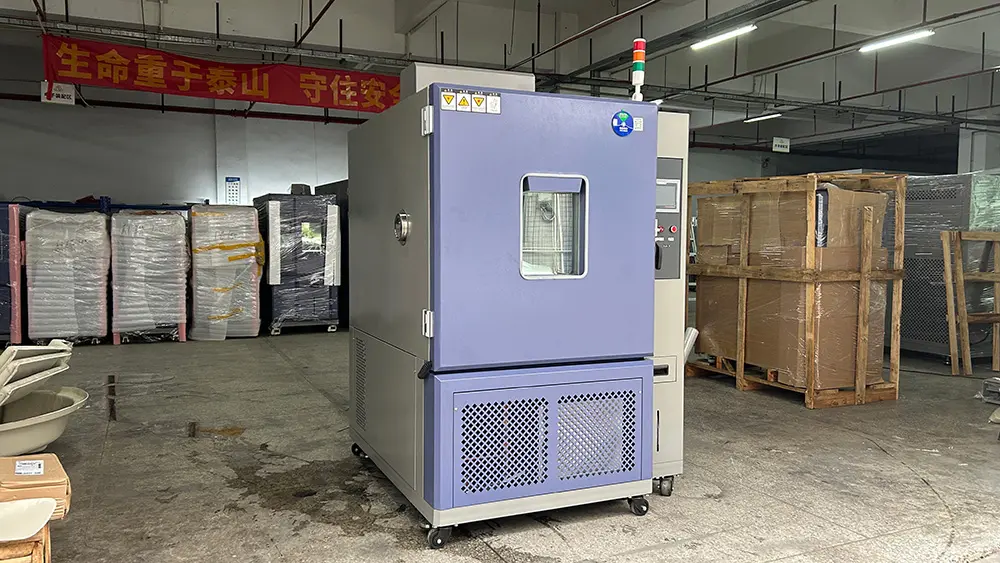
When customers in the U.S. build for global programs, Chinese and Asian rapid temperature change testing standards usually sit right in the RFQ. I design chambers to hit these standards cleanly, without “interpretation.”
GB/T 28046.4-2011 – China Automotive Temperature Shock
GB/T 28046.4-2011 is China’s core automotive temperature shock / rapid temperature change standard for electrical and electronic components in road vehicles.
Typical expectations you’ll see:
- Test style: air-to-air temperature shock / rapid temperature cycling
- Use case: ECUs, sensors, control modules, infotainment, power electronics in Chinese OEM platforms
- Profiles: similar to ISO 16750-4, with:
- Low temp (often −40 °C range) to high temp (up to +85–125 °C range)
- Fast temperature change between extremes
- Defined dwell times at each extreme and strict transfer time limits
- What matters for chambers:
- Stable operation through wide automotive range (−40 °C to 125/150 °C)
- Controlled temperature rate of change to meet OEM program specs
- Reliable cycling for hundreds of cycles without drift
If you’re supplying into China or global platforms with China localization, your chamber needs to show GB/T 28046.4 compliance capability on the spec sheet.
JIS D 0204 – Japanese Automotive Environmental Tests
JIS D 0204 covers environmental tests for automotive electrical and electronic equipment in Japan, including temperature shock and temperature cycling.
Key points for rapid temperature change:
- Application: Japanese OEMs, Tier 1s, and global platforms using Japanese validation rules
- Test content:
- Temperature cycling between low and high setpoints
- Specified ramp rates and dwell times
- Often coordinated with vibration
Battery and new energy rapid temperature change standards
When we talk rapid temperature change testing for batteries and new energy systems, the standards are very specific about temperature rate of change, dwell time, and safety. Here’s how the key specs line up and what that means for your chamber choice.
UN38.3 T.3 – Transport safety
Comparison of Major Rapid Temperature Change Testing Standards
When I’m helping customers in the U.S. pick a test standard, I usually start by comparing four things: test type (cycling vs thermal shock), minimum ramp rate, transfer time, and typical cycle counts and industries. Here’s a clean side‑by‑side view.
Temperature cycling vs thermal shock
- Temperature cycling
- “Fast but controlled” ramps (e.g., 5–20 °C/min).
- Focused on fatigue and long‑term reliability.
- Used heavily for automotive electronics, semiconductors, EV batteries.
- Thermal shock / rapid temperature change
- Very steep change between extremes, often using two‑zone or three‑zone chambers.
- Transfer time (moving part from hot to cold) is critical, often ≤10 s or ≤1 min.
- Used when customers care about cracking, delamination, solder joint robustness, sealing.
Rapid temperature change test standards at a glance
1. IEC 60068‑2‑14 (Test Na / Nb) – Electronics / General
| Item | IEC 60068‑2‑14 Test Na | IEC 60068‑2‑14 Test Nb |
|---|---|---|
| Test type | Rapid change / thermal shock | Slow change / temperature cycling |
| Typical ramp rate | 3–10 °C/min (often 5 or 10) | 1–3 °C/min |
| Transfer time (if Na step) | Usually ≤10–30 s | Not critical |
| Typical cycle count | 10–200 cycles | 10–100 cycles |
| Main industries | General electronics, telecom, aerospace modules | Industrial, lab-grade electronics |
- If your spec references “Change of temperature” or IEC 60068‑2‑14 Test Na, you’re in rapid temperature change territory.
2. MIL‑STD‑810H Method 503.7 – Defense / Rugged
| Item | Value / Typical Requirement |
|---|---|
| Test type | Temperature shock (air‑to‑air) |
| Procedure I ramp rate | ≥ 30 °C/min between extremes |
| Transfer time | ≤ 1 min between hot/cold conditions |
| Typical cycle count | 3–10 shocks per configuration |
| Main industries | Defense, avionics, rugged outdoor equipment |
- Here, your chamber must move fast and handle tight transfer time. A standard temperature cycling chamber usually won’t cut it.
3. JESD22‑A104‑E – Semiconductors / ICs
| Item | Value / Typical Requirement |
|---|---|
| Test type | Temperature cycling (not pure thermal shock) |
| Common conditions | Condition C, Condition G, etc. |
| Typical temp ranges | −40 °C to 125/150 °C (and more severe options) |
| Minimum ramp rate | Often ≥ 15 °C/min (chamber level) |
| Typical cycle count | 500–1000+ cycles |
| Main industries | ICs, power semiconductors, automotive chips |
- If you’re doing AEC‑Q100 / AEC‑Q101, this is usually the base for temperature cycling.
4. Automotive rapid temperature change standards – LV124, ISO, OEM
| Standard / Spec | Test Type | Min Ramp / Requirements | Typical Cycles | Main Use |
|---|---|---|---|---|
| ISO 16750‑4 | Temperature cycling | Moderate ramps (OEM defined) | 50–200 cycles | Road vehicle electronics |
| LV124 K‑15 | Rapid temperature change | 15 K/min with 30 min dwell | 200–1000 cycles | German OEM ECUs, control units |
| VW 80000 / PTL 4002 | Thermal shock / fast cycling | Up to 20 K/min (module level) | 100–1000 cycles | VW / Porsche modules, power electronics |
| GMW3172 | High‑rate thermal shock | Fast transitions; OEM‑defined | 50–500 cycles | GM modules, ECUs, under‑hood components |
| AEC‑Q100 / Q101 | Temperature cycling | ≥ 15 °C/min (Test TC) | 500–1000+ cycles | Automotive ICs (Grades 0–3) |
| GB/T 28046.4‑2011 | Thermal shock / temp cycling | Similar to ISO 16750 / LV124 | 50–500 cycles | China automotive electronics |
| JIS D 0204 | Automotive environmental test | OEM‑defined ramps | 50–200 cycles | Japanese automotive electronics |
- In plain terms: 15 °C/min is the “entry ticket” for automotive electronics.
- If you’re doing LV124 K‑15, VW 80000, PTL 4002, you’ll want a chamber that can comfortably meet 15–20 K/min and hold tight stability at extremes.
5. Battery and EV standards – UN, IEC, USABC, SAE
| Standard / Spec | Test Type | Typical Ramp / Requirement | Industry Use |
|---|---|---|---|
| UN38.3 T.3 | Temperature test (safety) | Moderate, not ultra‑fast | Transport safety for packs/cells |
| IEC 62660‑2 | Cell cycling / thermal tests | Up to 30–50 °C/min in some cases | EV cells, HEV cells |
| GB38031‑2020 | Safety & abuse for packs | Fast transitions, OEM‑defined | China EV battery systems |
| FreedomCAR / USABC / SAE J2464 | Abuse & safety tests | Focus on hazard, not just ramp rate | U.S. EV / HEV programs |
- For EV batteries and power modules, high rates (≥30 °C/min) and controlled profiles are increasingly requested by OEMs.
How I match standards to industries
Here’s how I usually map rapid temperature change test standards to sectors:
- Automotive electronics / ECUs / ADAS modules
- LV124, VW 80000, GMW3172, ISO 16750‑4, AEC‑Q100/Q101, GB/T 28046.4, JIS D 0204
- Needs: 15–20 °C/min, many cycles, long‑term reliability.
- Defense, aerospace, rugged equipment
- MIL‑STD‑810H Method 503.7, IEC 60068‑2‑14 Na
- Needs: ≥30 °C/min, short transfer time, structural robustness.
- Semiconductors / power ICs / modules
- JESD22‑A104‑E, AEC‑Q100 / Q101
- Needs: high cycle count (500–1000) and consistent 15 °C/min or higher.
- EV batteries and powertrain
- IEC 62660‑2, UN38.3 T.3, GB38031, USABC / SAE guidance
- Needs: high rate cycling, safety, and abuse conditions.
If you tell me your industry, component type, and target standard, I can size a rapid temperature change chamber that hits the required ramp rate (°C/min), transfer time, and cycle profile without over‑ or under‑spec’ing your equipment.
How to choose the right rapid temperature change standard
When you’re picking a rapid temperature change testing standard, you can’t just grab the first spec that mentions “thermal shock” or “temperature cycling.” You need to map the standard to your industry, your component type, and your reliability targets, then make sure your chamber can actually hit the temperature rate of change and transfer time that the standard calls for.
Map by industry: automotive, aerospace, defense, electronics, battery
In the U.S. market, most customers fall into one of five buckets. Here’s how I usually line it up:
Automotive (LV124, ISO 16750-4, AEC-Q, VW 80000, GMW3172, GB/T 28046.4)
Use these if you build:
- ECUs, ADAS modules, power inverters, on-board chargers
- Sensors, power modules, LED drivers, DC/DC converters
- HV battery packs, BMS boards, connectors for road vehicles
Typical need:
- Temperature cycling and rapid temperature change tests from −40 °C to +125/+150 °C
- ≥15 °C/min rate (LV124 K-15, AEC-Q100/AEC-Q101)
- For some OEMs (VW 80000, Porsche PTL 4002, GMW3172), up to 20 °C/min or dedicated thermal shock
Aerospace & Defense (MIL-STD-810H, GJB 150.5A, company specs)
Use military / aerospace standards if you supply:
- Avionics LRUs, flight computers, guidance electronics
- Ruggedized comms, sensors, mission computers, power units
Typical need:
- MIL-STD-810H Method 503.7 temperature shock
- High ΔT between extremes and fast transfer times (often ≤1 min, sometimes seconds)
- Focus on survival and mission reliability more than just long-cycle life
Commercial electronics (IEC 60068-2-14, JESD22-A104)
Use these for:
- Consumer and industrial electronics, ICT gear, 5G boards
- Semiconductors, IC packages, power devices, modules
Typical need:
- IEC 60068-2-14 Test Na / Nb for change of temperature
- JESD22-A104-E for semiconductor temperature cycling
- Rates like 3, 5, 10, 15 °C/min and up, with 500–1000+ cycles for IC reliability
Battery & new energy (UN38.3, IEC 62660-2, GB 38031, SAE J2464, USABC/FreedomCAR)
Use these if you’re dealing with:
- EV cells, modules, packs
- Energy storage systems and power battery systems
Typical need:
- Safety-focused temperature tests (UN38.3 T.3, GB 38031)
- Performance and life tests with higher temperature change rates (IEC 62660-2 can go 30–50 °C/min)
- Severe thermal shock or fast cycling for high power, fast-charge designs
Match component type and reliability target to severity
Once you know your sector, dial in the severity level:
- Small ICs and boards (JESD22-A104, AEC-Q100/101)
- Use standard temperature ranges like −40 °C to 125 °C or 150 °C
- Rates: ≥15 °C/min for automotive-grade silicon
- Cycles: 500–1000+ for long-term reliability
- Modules and ECUs (LV124, GMW3172, VW 80000)
- Rapid temperature change: 15–20 K/min between extremes
- Dwell times: often 20–30 minutes each side
- Cycle count depends on OEM – from dozens to hundreds
- High power / EV systems (inverters, chargers, battery packs)
- Consider higher rates and larger ΔT than the bare minimum
- Look for guidance in IEC 62660-2, SAE J2464, internal OEM spec
- Aim to expose connector interfaces, solder joints, potting, busbars to realistic thermal stress
If your product is safety-critical or mission-critical (brakes, steering, avionics, life-support electronics), always bias toward more severe testing, not less.
Dealing with OEM and customer-specific specs
In the U.S., most tier suppliers don’t just follow one base standard; they live inside OEM-specific requirements. Here’s how I navigate that:
- Start with the base standard
- Example: AEC-Q100 + LV124 for an automotive ECU
- Or IEC 60068-2-14 + JESD22-A104 for a telecom board
- Overlay OEM specs
- VW, GM, Ford, Stellantis, Tesla, and others will reference the base standard, then tweak:
- Temperature extremes
- Temperature rate of change
- Transfer time limits
- Number of cycles and dwells
- VW, GM, Ford, Stellantis, Tesla, and others will reference the base standard, then tweak:
- Clarify test intent with the OEM
- Is this thermal shock (fast transfer, minimal transition time) or just fast temperature cycling?
- Do they require air-to-air or liquid-to-liquid thermal shock?
- Check chamber capability vs. spec
- Don’t accept “as close as possible” unless you have written approval
- If the spec says 15 K/min or transfer time <10 s, your equipment needs to actually do it
We design our rapid temperature change chambers specifically so U.S. customers can meet these OEM specs without having to argue over whether the chamber is “fast enough.”
When to go beyond the minimum temperature change rate
The minimum temperature rate of change in the standard is usually just that: a minimum. I recommend going beyond it in three cases:
- High power electronics and EV designs
- Power modules, SiC/GaN inverters, onboard chargers, DC fast-charging hardware
- These see much faster real-world thermal ramps than 10–15 °C/min on the bench
- Pushing to 30–50 °C/min (or using a true thermal shock chamber) exposes:
- Solder fatigue
- Bond wire failures
- Package cracking
- Delamination and interface issues
- Aggressive duty cycles and hot climates (U.S. Southwest, Texas, etc.)
- Vehicles and equipment in Arizona, Nevada, Texas, and similar climates face:
- High ambient temperatures
- Rapid heat-up from load
- It makes sense to simulate worst-case gradients rather than mild lab ramps
- Vehicles and equipment in Arizona, Nevada, Texas, and similar climates face:
- Long service life or low field-failure tolerance
- If you’re targeting 10–15 years vehicle life or aviation-grade reliability, standard severity might be too soft
- Increasing the ramp rate, ΔT, or cycle count is often cheaper than field failures and recalls
Our high performance rapid temperature change chambers are built more for future EV and high-power demands than just today’s bare-minimum specs. We aim for linear rates up to and beyond 70 °C/min with tight control, so you’re not locked in when standards inevitably get tougher.
Simple decision flow: choosing your rapid temperature change
Equipment requirements for rapid temperature change testing
When I talk with U.S. customers about rapid temperature change testing, the same thing comes up over and over: the chamber is the limiting factor. If the equipment can’t hit the required temperature rate of change, it doesn’t matter how good the test plan looks on paper.
Below is how I break down rapid temperature change testing equipment in simple, practical terms.
Standard temperature cycling chamber vs true thermal shock chamber
Standard temperature cycling chambers are great for IEC, AEC, and general reliability work at moderate rates, but they are not “thermal shock” machines.
Key differences:
| Feature | Standard temp cycling chamber | True thermal shock chamber |
|---|---|---|
| Typical use | IEC 60068-2-14 Nb, AEC-Q100, JESD22-A104, ISO 16750-4 | IEC 60068-2-14 Na, LV124 K-15, GMW3172, MIL-STD-810H |
| Temperature change rate (ramp) | ~3–15 °C/min (K/min) linear | 30–70+ °C/min effective (including transfer) |
| Transfer time between extremes | Not controlled / several minutes | <10 s (high-end systems <5–8 s) |
| Method | One workspace, air cooled/heated | 2-zone or 3-zone, product moved between hot & cold zones |
| Purpose | Temperature cycling (fatigue) | True thermal shock (stress from sudden change) |
If your spec talks about “rapid change”, “thermal shock”, “transfer time <10 s”, or 70 °C/min, you are in thermal shock chamber territory, not just a fast cycling chamber.
Minimum ramp capability by major rapid temperature change standards
Here’s a quick rule-of-thumb matrix for the minimum temperature rate of change you should design for. (Actual requirements depend on profile and load, but this gives you a realistic target.)
| Standard / Spec | Typical requirement (chamber capability) |
|---|---|
| IEC 60068-2-14 Test Nb (slow change) | 3–10 °C/min linear ramps |
| IEC 60068-2-14 Test Na (rapid change) | 10–20 °C/min effective, short transfer preferred |
| AEC-Q100 / AEC-Q101 | ≥15 °C/min (many OEMs push 15–20 °C/min) |
Common mistakes in rapid temperature change testing
Using slow chambers and calling it “thermal shock”
A lot of labs run 3–5 °C/min in a standard temperature chamber and label it “rapid temperature change” or even “thermal shock.” That doesn’t fly with most specs.
If you’re trying to meet LV124 K-15, AEC-Q100 / AEC-Q101, ISO 16750-4, MIL‑STD‑810H 503, or IEC 60068-2-14 Na, you need to check:
- Rated temperature rate of change (°C/min or K/min) over the full load range
- Ability to hold that rate with powered DUTs, harnesses, and real loads
- Whether the chamber is single-zone cycling or a true two-zone / three-zone thermal shock system
If the chamber can’t hit the rate the standard demands, the test data is weak at best and invalid at worst.
Ignoring transfer time limits
Real thermal shock test standards care about transfer time just as much as rate:
- IEC 60068-2-14 Na, MIL‑STD‑810H 503, GMW3172, VW 80000, and GB/T 28046.4 all expect short transfer times
- For true thermal shock, you’re usually looking at ≤10 s (air‑to‑air) and often ≤5–8 s on higher-end systems
If your chamber needs 30–60 s to move from hot to cold, you’re running temperature cycling, not thermal shock. That changes the failure modes, especially for solder joints, bond wires, and EV battery interfaces.
Choosing the wrong severity level or cycle count
Another common miss: picking severity levels that don’t match the standard or the field use:
- Using too mild profiles (e.g., −20 °C to 70 °C) when the spec calls for −40 °C to 125/150 °C
- Running 50–100 cycles when AEC‑Q100, JESD22‑A104, ISO 16750-4, or LV124 call for 500–1000+ cycles for automotive-grade reliability
- Ignoring dwell time at extremes, which is often locked in the spec (e.g., 30 min hot / 30 min cold)
I always tell customers: match the spec first, then tune for your real‑world reliability targets. Cutting cycles or temperature range to “save time” usually just delays failures until you’re in the field.
Mismatching chamber capability with ramp rate requirements
This is where a lot of U.S. teams run into trouble when they move from consumer to automotive, EV battery, aerospace, or defense work:
- Standard temperature cycling chambers often top out at 5–10 °C/min with real loads
- Automotive and power electronics specs routinely call for 15 °C/min or higher
- High-end rapid temperature change chambers and air‑to‑air thermal shock chambers may need to hit 30–70 °C/min or more with <8–10 s transfer
Before you commit to a standard like LV124 K‑15, Porsche PTL 4002, VW 80000, GMW3172, or IEC 62660-2 for batteries, you should:
- Check your chamber’s guaranteed ramp rate (not the empty-chamber showroom number)
- Confirm load capacity at that rate (kW heat load, DUT size, fixture mass)
- Make sure your system can support both 15 °C/min cycling and 70 °C/min thermal shock if your roadmap is heading toward EV, ADAS, and power modules
As an environmental test chamber manufacturer specializing in rapid temperature change testing, I design systems specifically to avoid these traps: true, verified ramp rates, tight transfer times, and configurations that actually match IEC, MIL, JESD, ISO, LV124, and AEC requirements so you’re not fighting your equipment every time you bid on a new program.
Rapid Temperature Change Testing FAQ
Fastest temperature change rate required by automotive standards
In automotive rapid temperature change testing, most “standard” requirements top out around 15–20 °C/min (15–20 K/min) for air-based systems, but some OEMs push higher:
- AEC-Q100 / AEC-Q101: Typically call for ≥15 °C/min for temperature cycling of automotive-grade ICs and discrete devices.
- LV124 / VW 80000 / Porsche PTL 4002: Commonly specify 15–20 K/min rapid temperature change for ECUs, power modules, and ADAS controllers.
- GMW3172: Includes higher rate thermal shock sections and tight transfer times; in practice, labs tend to run 15–25 °C/min ramps or use dedicated thermal shock chambers.
For now, 20 °C/min is about the high end explicitly written into most automotive specs for air-to-air chambers. Where you see the “fastest” temperature rate in real use is in battery and power electronics R&D, where customers ask for 30–70 °C/min ramps to simulate severe use cases and fast charging/fast discharging stress—even if the base standard doesn’t demand it yet.
When we size chambers for U.S. automotive customers, I usually suggest:
- 15 °C/min minimum if you want to reliably meet AEC-Q100/101 and LV124.
- 20–30 °C/min if you’re building a future-proof lab for EV, inverter, and DC/DC converter testing.
- ≥70 °C/min linear rate only if you’re targeting true thermal shock, aggressive OEM requirements, or heavy R&D on high-power systems.
Is IEC 60068-2-14 Test Na true thermal shock or just fast temperature cycling?
IEC 60068-2-14:2026 splits change of temperature into Na (rapid change) and Nb (slow change):
- Test Na:
- Faster temperature rate of change, typically 5–15 °C/min (sometimes higher if specified).
- Used for rapid temperature cycling, often in one chamber, with controlled ramp rates and dwells.
- Transfer time can be short, but it’s usually not sub-10 seconds like a classic thermal shock system.
- Test Nb:
- Slower rate, often ≤1–3 °C/min.
- More about gradual cycling, simulating diurnal or operating environment changes.
So, IEC 60068-2-14 Na is “rapid temperature cycling,” not pure thermal shock in the strict sense that you see in MIL-STD-810H Method 503.7 or classic air-to-air / liquid-to-liquid thermal shock with sub-10-second transfer times. In daily lab language, Na is fast cycling, while thermal shock usually means a dedicated two-zone or three-zone system with very fast transfer and minimal ramp time between extremes.
If your customer or spec says “thermal shock according to IEC 60068-2-14 Na”:
- You can usually perform it in a high-performance temperature cycling chamber with the required °C/min rate.
- But if they emphasize “thermal shock” with <10 s transfer, they’re typically pointing toward a thermal shock chamber and not just a fast cycling unit.
Can one chamber cover both 15 °C/min and 70 °C/min rapid temperature change tests?
Technically, yes. Practically, it depends on design and budget.
- A standard rapid temperature cycling chamber designed for electronics and automotive modules usually supports 5–20 °C/min linear ramp rates over a typical range like −40 °C to +125 °C.
- To reliably hit 70 °C/min with good load, you’re in thermal shock / high-performance territory, with:
- Very strong refrigeration and heating capacity
- Optimized airflow and thermal mass management
- Often a two-zone or three-zone layout, or a very powerful single-zone system with limited sample mass
From an equipment standpoint:
- If your daily work is AEC-Q100, LV124 K-15, ISO 16750-4, IEC 60068-2-14 Na, a 15–20 °C/min rapid cycling chamber is usually the best value.
- If you also need true thermal shock at 70 °C/min with very fast transfer, I usually recommend:
- One rapid cycling chamber for everyday qual work and life tests.
- One dedicated thermal shock system (air-to-air or liquid-to-liquid) for shock-specific requirements and R&D.
You can buy a single “do it all” chamber, but you’ll pay a premium and often compromise on usable load, operating cost, and test flexibility. Most serious U.S. labs split the work across two specialized platforms.
When do I need a two‑zone vs three‑zone chamber for LV124 and similar specs?
For LV124 K-15 rapid temperature change, and similar automotive electronics standards (VW 80000, Porsche PTL 4002, GMW3172):
- Two‑zone thermal shock chamber (hot zone + cold zone) is typically enough when:
- The spec requires fast transfer between two fixed extremes (e.g., −40 °C ↔ +125 °C).
- You mainly run repeated thermal shock cycles with short transfer times (often <10 s chamber-to-chamber).
- You don’t need an intermediate ambient step.
- Three‑zone thermal shock chamber (hot + ambient + cold) is the better choice when:
- The OEM demands a “ambient” or room temperature hold between hot and cold—some LV124 customer-specific specs and GMW3172 options do this.
- You need to simulate real-world transitions like vehicle parked in ambient after highway operation and then going into a cold soak.
- You want the flexibility to run hot → ambient → cold or cold → ambient → hot cycles with controlled dwell times in each zone.
In our experience with U.S. automotive customers:
- For standard LV124 K-15 requirements focused on 15 K/min ramping and hot/cold dwells, most test labs are fine with a fast temperature cycling chamber (not necessarily multi-zone) as long as ramp rates and stabilization times are met.
- For thermal shock-style OEM extensions (very short transfer times and extreme swings), a two-zone shock chamber is usually sufficient.
- If your customer is a German OEM or Tier 1 with complex test profiles including ambient mid-steps, we normally suggest going straight to a three-zone thermal shock chamber to avoid future limitations.
If you’re unsure, I’d map your needs like this:
- Only LV124 / AEC-Q100 basic rapid cycling → High-performance rapid temperature change chamber, 15–20 °C/min.
- LV124 + customer-specific thermal shock + some ambient steps → Three‑zone thermal shock system for maximum flexibility.
- Pure hot ↔ cold shock without ambient → Two‑zone system is cost-effective and plenty capable.

Dexiang| Instruments
As a high-tech manufacturer, we integrate R&D, design, production, and sales under one roof. Our philosophy—"Quality Ensures Survival, Integrity Drives Development, and Management Yields Efficiency"—is woven into every product we build. We continuously assimilate cutting-edge global technologies and refine our practices through years of hands-on experience.