Recommendation


Understanding Universal Testing Machines: A Quick Primer
Have you ever wondered how manufacturers ensure materials like metals, plastics, or composites can handle real-world forces? That’s where a Universal Testing Machine (UTM) comes in. Simply put, a UTM is a versatile device designed to test the mechanical properties of various materials by applying different types of forces.
Core Functionality
At its heart, a Universal Testing Machine measures how a material reacts when subjected to forces such as pulling, pushing, bending, or shearing. It tells you crucial details like strength, elasticity, and failure points—information essential for product design, quality control, and safety certification.
Key Components
- Load Frame: The strong, rigid part that holds the specimen in place and applies force.
- Crosshead: Moves up or down to apply tension or compression.
- Grips or Fixtures: Secure the test sample during testing.
- Load Cell: Measures the actual force applied with high precision.
- Extensometer: (Optional) Records how much the material stretches or compresses.
- Control Unit & Software: Controls the test parameters and collects data, often providing automated, detailed reports.
By combining these elements, UTMs carry out precise mechanical testing across a wide range of materials—making them invaluable to industries from aerospace to construction. Whether you’re checking tensile strength or compression limits, the UTM offers a reliable, straightforward way to understand how your materials will perform under stress.
Core Test Types Performed by Universal Testing Machines
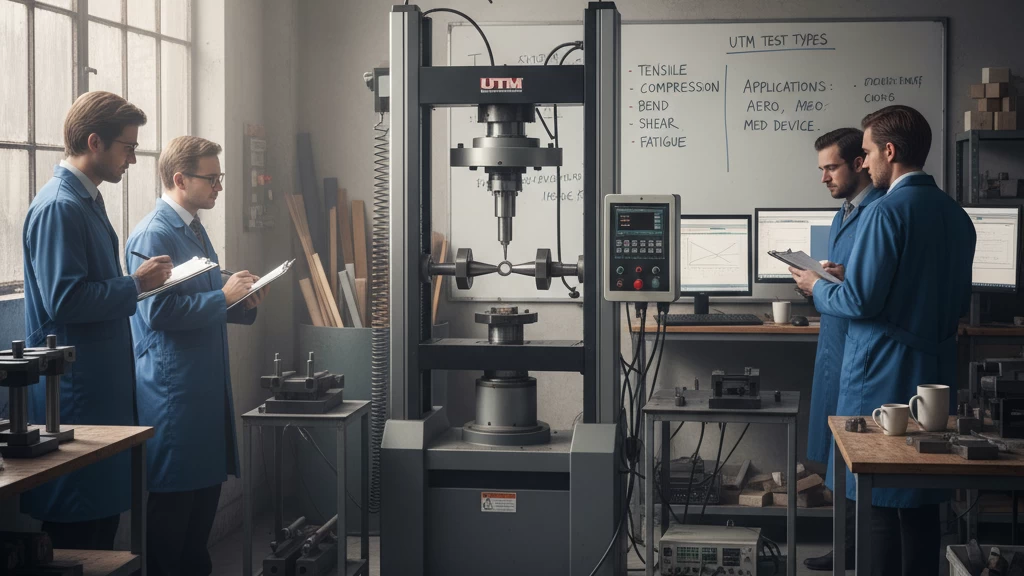
Universal Testing Machines (UTMs) handle several key tests to measure material mechanical properties. Here’s a quick look at the main ones:
Tensile Testing
- Pulls a sample until it breaks
- Measures tensile strength, elongation, and elasticity
- Shows how much a material can stretch before failing
Compression Testing
- Pushes a sample to check how much load it can bear
- Measures compressive strength and deformation
- Useful for materials in load-bearing applications like concrete and metals
Flexural (Bend) Testing
- Bends a material sample to assess resistance
- Measures flexural strength and modulus
- Important for plastics, composites, and construction materials
Shear Testing
- Applies force parallel to the surface
- Measures shear strength of adhesives, welds, and joints
- Checks how well materials hold together under sliding forces
| Test Type | What It Measures | Common Materials Tested | Typical Industry Use |
|---|---|---|---|
| Tensile Testing | Strength, elongation, elasticity | Metals, polymers, textiles | Aerospace, automotive, R&D |
| Compression | Load-bearing capacity | Concrete, steel, composites | Construction, civil engineering |
| Flexural | Bending resistance | Plastics, composites, ceramics | Manufacturing, quality control |
| Shear | Adhesion, joint strength | Adhesives, welds, composites | Electronics, biomedical fields |
These tests provide vital information about how materials behave under different forces, helping guide design, production, and quality assurance.
Industry-Specific Applications of Universal Testing Machines
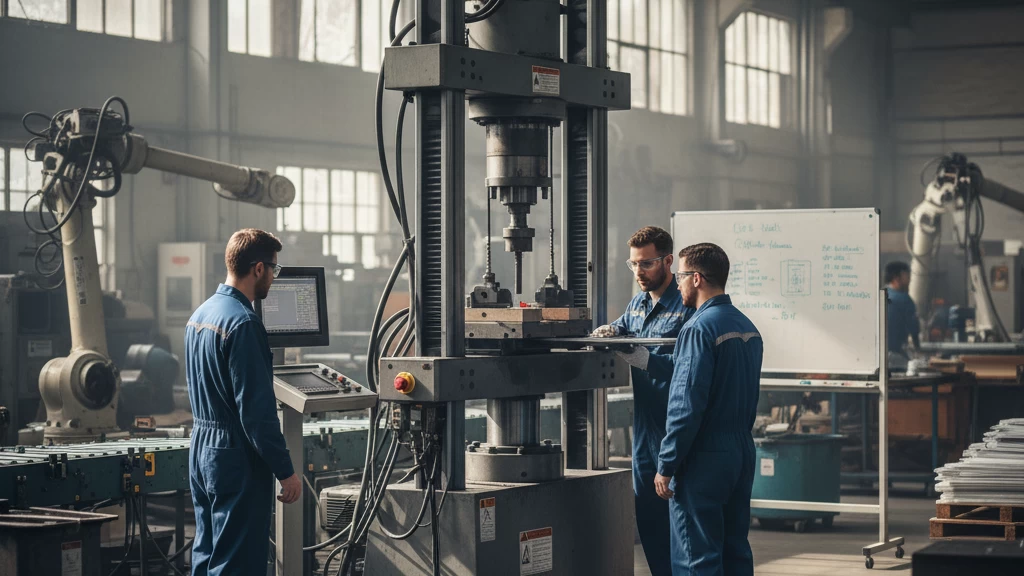
Universal testing machines are essential across many industries in the U.S., helping ensure materials and products meet strict quality and safety standards.
Aerospace and Automotive
In aerospace and automotive sectors, UTMs test crash safety and fatigue resistance of alloys and composite materials. These tests are critical to making sure parts withstand real-world stresses without failing, which keeps passengers safe and boosts vehicle durability.
Construction and Civil Engineering
The construction industry relies on UTMs to perform compression and flexural strength tests on materials like concrete and steel. These tests verify that structures can bear loads and resist bending forces, which is vital for building safe bridges, buildings, and infrastructure.
Manufacturing and Quality Control
Manufacturers use universal testing machines for routine quality control. This includes tensile strength testing and compression tests on plastics, metals, and adhesives to confirm products meet ASTM and ISO standards before they hit the market, avoiding costly recalls or failures.
Materials Science and R&D
Research labs and materials scientists use UTMs to explore mechanical properties of polymers, textiles, and biomaterials. Testing elongation, tensile strength, and other factors helps develop new materials for industries like medical devices and advanced textiles.
Emerging Uses
UTMs are expanding into newer fields such as shipbuilding, where hull integrity tests are crucial, and electronics, where flexural testing ensures circuit boards and components survive bending stresses. Biomedical research also benefits, testing tissue scaffolds for strength and durability.
These wide-ranging applications highlight how versatile universal testing machines are, helping U.S. industries maintain high-quality standards and innovate with confidence.
Benefits of Universal Testing Machines in Real-World Scenarios
Universal testing machines (UTMs) offer several clear advantages that make them essential in many industries across the U.S. Here’s why they stand out in real-world use:
1. Cost Savings with Multi-Test Versatility
- One machine handles tensile, compression, flexural, and shear tests
- Reduces the need to invest in multiple devices
- Saves on maintenance and training costs
2. High Accuracy and Scalability for Quality Control
- Precise measurements ensure materials meet strict ASTM and ISO standards
- Useful for both small batch testing and full production runs
- Consistent results help maintain product reliability
3. Integration with Software for Automated Reporting
- Many UTMs come with user-friendly software for data collection
- Automates test reports, cuts down on paperwork
- Helps quickly spot trends and potential material failures
4. Risk Reduction and Improved Product Reliability
- Accurate mechanical property measurement prevents product recalls
- Early detection of weak points means safer products
- Supports compliance with safety regulations, lowering liability
Quick Look: UTM Benefits Table
| Benefit | Why It Matters | Example Use Case |
|---|---|---|
| Multi-Test Versatility | Lower equipment costs | Testing metal and plastics with one machine |
| High Accuracy | Reliable product performance | Automotive crash safety testing |
| Automated Reporting | Saves time and human error | Quality control labs |
| Risk Reduction | Safer and compliant products | Construction material testing |
In the U.S., where industries demand both reliability and efficiency, universal testing machines deliver valuable data while reducing test costs. This makes them a smart investment for quality control teams and R&D departments looking to keep products safe, strong, and ready for market.
Choosing the Right Universal Testing Machine for Your Applications
Picking the right universal testing machine (UTM) comes down to a few key factors that match your specific needs. Here’s what to consider:
- Force Capacity: Make sure the machine can handle the maximum load you expect to test. For heavy-duty materials like steel or concrete, you’ll need a high-force UTM, while smaller samples like plastics or textiles require less.
- Testing Speed: Some applications need faster testing speeds to simulate real-world conditions, especially in quality control or fatigue testing. Other tests take longer and need slower, steady rates for accuracy.
- Accessories and Attachments: Different materials and tests—tensile, compression, shear, or flexural—sometimes need custom grips, fixtures, or environmental chambers. Check if the machine supports these extras for your requirements.
- Electromechanical vs. Hydraulic: Electromechanical machines are popular for precision testing in labs due to their accuracy and speed control. Hydraulic UTMs are tougher and better for high-force, heavy materials testing but often cost more and need more maintenance.
- Compliance with Standards: Make sure the UTM can meet ASTM and ISO testing standards relevant to your industry. Some machines come with ready-made, certified test setups or software that simplifies compliance.
- Consultation Services: If your testing needs are unique or complex, consulting with manufacturers or experts for a custom setup helps ensure you get the right machine tailored to your demands.
By focusing on these points, you can find the UTM that fits your application perfectly—whether you’re in manufacturing, research, or quality control.
Future Trends in UTM Applications and Innovations
The future of universal testing machines (UTM) is shaping up with some exciting innovations, especially for industries here in the U.S. One major trend is AI-driven data analysis. Using artificial intelligence, these machines can now handle multi-sample testing faster and with greater accuracy, helping labs and manufacturers save time and get smarter insights from their data.
Another growing focus is on testing sustainable materials. As American companies push for greener products, UTMs are evolving to evaluate everything from recycled plastics to eco-friendly composites, making sure these alternatives meet strict performance standards.
We’re also seeing huge growth in testing for electric vehicle (EV) batteries and 3D-printed composites. These materials are becoming core to the future of transportation and manufacturing, and UTMs play a key role in ensuring their strength, durability, and safety.
Companies like Dexiang lead the way with innovative designs, including advanced servo-hydraulic upgrades that improve testing speeds and force accuracy. These upgrades make the machines more versatile and reliable, helping U.S. businesses stay ahead in quality control and product development.
In short, UTMs are not just sticking to traditional uses—they’re evolving to meet new tech demands and support America’s ongoing push for innovation and sustainability.
Dexiang| Instruments
As a high-tech manufacturer, we integrate R&D, design, production, and sales under one roof. Our philosophy—"Quality Ensures Survival, Integrity Drives Development, and Management Yields Efficiency"—is woven into every product we build. We continuously assimilate cutting-edge global technologies and refine our practices through years of hands-on experience.