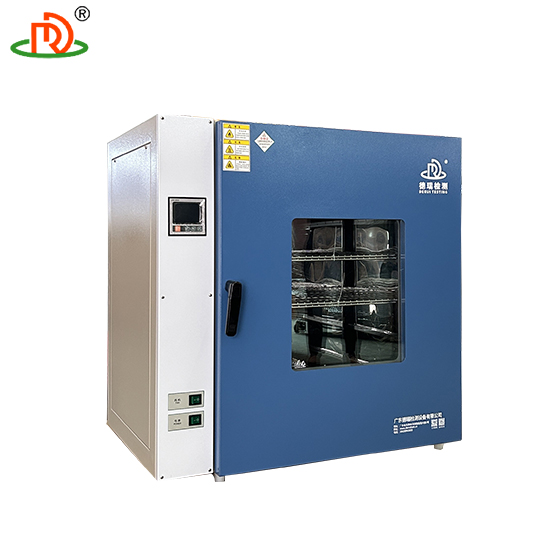
Mini Drying chamber
A compact, precision-engineered benchtop solution for controlled drying of sensitive materials in laboratory, pharmaceutical, and electronics manufacturing environments.
- Model:DR-H205
- Temperature Range :200°C~300°C
- Electrothermal Tube :4 KW
- Outer box :Steel plate with spraying surface
Recommendation


Product Details
Mini Drying Chamber: Precision Drying Solutions for Compact Applications
For industries requiring controlled drying processes in space-constrained environments, the Mini Drying Chamber delivers laboratory-grade performance with industrial durability. Designed for small-scale production, R&D, and quality control, this benchtop unit ensures consistent results while meeting stringent ASTM and ISO standards.
Key Features & Technical Specifications
- Compact Yet Capable Design
- Chamber volume: 15L to 60L, optimized for small batches of components, PCBs, or medical devices.
- Stainless steel interior (304 grade) with corrosion-resistant exterior powder coating.
- Precision Temperature Control
- Operating range: Ambient +5°C to 250°C (±1°C uniformity).
- Programmable 10-step ramp/soak profiles for multi-phase drying cycles.
- Advanced Airflow System
- Horizontal laminar airflow with adjustable vents minimizes temperature stratification (<±2°C across shelves).
- HEPA-compatible filters (optional) for cleanroom applications (ISO Class 8).
- Energy Efficiency
- 30% reduced power consumption vs. standard ovens, achieved through ceramic fiber insulation and PID-controlled heaters.
- Material Versatility
- Safely dries heat-sensitive polymers, ceramics, and electronic assemblies without warping or degradation.
Mini Drying chamber Product parameters:
| items | Specification |
| Interior Size(W×D×H) | 250×250×250mm |
| Dismension (W×D×H) | 490×460×450mm |
| Accuracy | ±1% |
| Temperature Range | 200°C~300°C |
| Motor | 1/4 HP |
| Electrothermal Tube | 4 KW |
| Material Inner pot | Carbonsteel |
| Outer box | Steel plate with spraying surface |
| Weight | 135kg |
| Sample tray | Stainless steel, 2pcs |
| Internal material | Stainless steel |
| Power | AC 220V/19A |
Frequently Asked Questions (FAQs) About Mini Drying chamber
1. What is a Mini Drying Chamber?
A Mini Drying Chamber is a compact, laboratory-grade device designed to dry or remove moisture from samples under controlled temperature and airflow conditions. It is commonly used in research, manufacturing, and quality control to prepare or stabilize materials for further testing or processing.
2. What are the typical applications of a Mini Drying Chamber?
Mini Drying Chambers are used in various industries, including pharmaceuticals (drying raw materials), electronics (moisture-sensitive components), automotive (drying coatings), and materials science (sample preparation). They are also ideal for drying samples after environmental tests, such as UV weathering or humidity exposure.
3. What temperature range does a Mini Drying Chamber offer?
Most Mini Drying Chambers offer a temperature range from ambient to 200°C, with precise control (±1°C to ±2°C accuracy). This range is suitable for drying a wide variety of materials, from delicate polymers to robust metals.
4. How does a Mini Drying Chamber ensure uniform drying?
Uniform drying is achieved through a combination of forced air circulation, strategically placed fans, and insulated chamber walls. These features ensure consistent temperature distribution and prevent hot or cold spots, which could compromise drying results.
5. Can a Mini Drying Chamber be used for moisture-sensitive materials?
Yes, Mini Drying Chambers are ideal for drying moisture-sensitive materials. Their precise temperature control and low-humidity environment make them suitable for applications such as drying electronic components, powders, or hygroscopic substances.
6. What safety features should I look for in a Mini Drying Chamber?
Key safety features include over-temperature protection, automatic shutoff, insulated exteriors to prevent burns, and door-open alarms. These features ensure safe operation, especially when working with high temperatures or sensitive materials.
7. How do I clean and maintain a Mini Drying Chamber?
Regular maintenance includes wiping the interior with a damp cloth to remove residue, checking and calibrating temperature sensors, and ensuring proper airflow by inspecting fans and vents. Avoid using abrasive cleaners that could damage the chamber’s interior.
8. What is the capacity of a typical Mini Drying Chamber?
Capacity varies, but most Mini Drying Chambers range from 20 to 100 liters. Compact designs are ideal for laboratories with limited space, while still accommodating small to medium-sized samples.
9. Can a Mini Drying Chamber be programmed for specific drying cycles?
Yes, many advanced models feature programmable timers and multi-step drying cycles. This allows users to set specific temperature profiles and durations, making it easier to replicate precise drying conditions for different materials.
Dexiang| Instruments
As a high-tech manufacturer, we integrate R&D, design, production, and sales under one roof. Our philosophy—"Quality Ensures Survival, Integrity Drives Development, and Management Yields Efficiency"—is woven into every product we build. We continuously assimilate cutting-edge global technologies and refine our practices through years of hands-on experience.